
Orthodontist North York
If you feel embarrassed by your misaligned teeth, visit us at Walk In Family Dentistry, where top-of-the-line orthodontic services in North York, Toronto are available at affordable rates. Experience unparalleled orthodontic care, with high-tech digital imaging and clear aligners for children, teens, and adults!
Short Notice Availability
New and emergency patients welcomed on short notice.
CDCP Accepted
Approved provider for the Canadian Dental Care Plan.
Google Reviews
Highly rated on Google by North York patient
Electronic Insurance Submission
We'll submit your insurance for you to speed up the process.

Medically reviewed by Dr. Vida Siar, DDS
OUR TREATMENTS
Clear Aligners
Discreetly correct misalignment with removable, transparent trays.
Retainers
Maintain your new smile and prevent teeth from shifting.
Consultations
Personalized assessments to plan the best orthodontic treatment.
Early Treatment
Address dental issues early to guide proper jaw and teeth development.
Removable Orthodontics
Flexible appliances to correct minor alignment issues comfortably.
How to Choose the Right Orthodontist for Your Smile?
Your smile is one of your greatest assets, but crooked, crowded, or misaligned teeth can affect both confidence and oral health. This is where an experienced orthodontist can help.
At Walk-In Family Dentistry in North York, near Jane and Finch, our skilled orthodontists provide treatments such as clear aligners, retainers, and expanders to improve the alignment, bite, and overall appearance of your teeth. We welcome patients of all ages, offering personalized orthodontic care in a modern and friendly environment.
If you are searching for the best orthodontist in North York, our team is here to help you achieve a healthy, confident, and beautiful smile.
Types of orthodontic issues
There are different types of teeth misalignment that need to be dealt with by a professional orthodontist, including:
- Overbite and Underbite
- Overlapping Teeth
- Gapped Teeth
- Crooked Teeth
- Tooth Rotation
To resolve each of these dental issues, our orthodontist has a wide choice between various forms of appliances, such as:
- Clear aligners (a series of appliances made from your teeth impressions at various stages of the treatment)
- Removable retainers (a custom-made appliance used to maintain ideal results)
Once you successfully finish your orthodontic procedure in North York, your teeth will stay in position for the rest of your life, on the condition that you regularly use your retainers.
Why Choose Our Orthodontist in North York Practice?
Walk-In Family Dental is a trusted orthodontic clinic, conveniently located near Jane and Finch. Our certified orthodontists use the latest technology to create personalized treatment plans for patients of all ages.
We provide a wide range of options, including Invisalign and clear aligners, designed to fit your lifestyle and goals. Our clinic is known for its welcoming environment, affordable pricing, flexible payment plans, and acceptance of most insurance providers.
If you are searching for a modern orthodontic clinic with expert care and a friendly team, visit Walk-In Family Dental. We are here to help you achieve the healthy and confident smile you deserve.
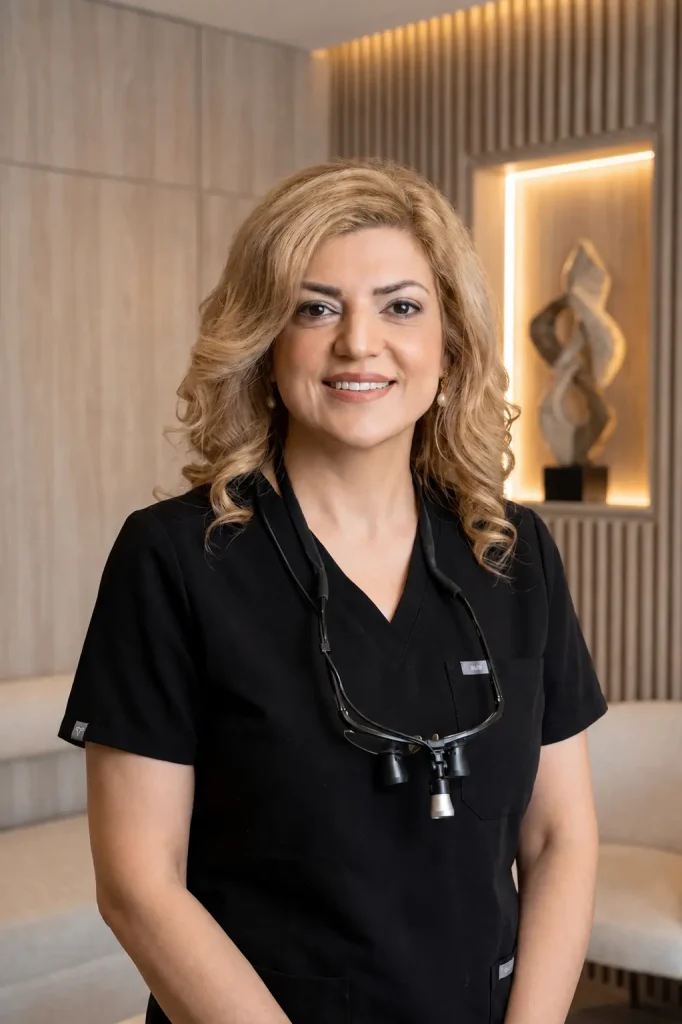
Dr. Vida Siar is a skilled aesthetic dentist at Walk-In Family Dentistry in North York, with over two decades of clinical experience helping patients achieve straighter, more harmonious smiles through orthodontic treatment. Known for her “light-handed” precision and deep understanding of facial balance, she approaches orthodontics with a keen aesthetic sensibility, ensuring that teeth are not only aligned for optimal function but positioned to complement each patient’s unique facial features and smile goals. As a member of the Ontario Dental Association and a devoted advocate for comprehensive smile care, Dr. Siar guides patients through every step of their orthodontic journey with clarity, comfort, and confidence-building results.
- Walk-In Emergency Appointments Available
- Member of the Ontario Dental Association (ODA)
- Member of the Royal College of Dental Surgeons of Ontario (RCDSO)
We’re accepting new patients. Give us a call or request an appointment online.
Advanced Technology Behind Every Treatment
Walk In Family Dentistry invests in modern dental equipment that makes treatments quicker, more precise, and more comfortable. Digital tools replace traditional moulds, advanced sterilization protects every patient, and sedation options support those with dental anxiety. Here’s the equipment our clinic relies on:
- Intraoral Scanner
- Autoclave Sterilizer
- Dental Chair with Integrated Technology –
- Digital Impression System
- Whitening System
- Ultrasonic Scaler
- Endodontic Rotary System
- ProMark Apex Locator
High-Quality Dentistry, Accessible to All
At Walk In Family Dentistry, our fees follow the Ontario Dental Association (ODA) guide, which keeps our pricing fair and predictable. We submit insurance claims electronically on your behalf and welcome patients with CDCP benefits. You’ll always see the full cost and coverage breakdown before any work begins.
Public Providers
- Canadian Dental Care Plan (CDCP)
- Non-Insured Health Benefits (NIHB)
- Interim Federal Health Program (IFHP)
- BC Healthy Kids Program
Private Providers
- Sun Life Financial
- Pacific Blue Cross
- Canada Life (formerly Great-West Life)
- Manulife
- Green Shield Canada
Our Promise to Every Patient is Simple: The Best Dental Visit You've Ever Had
You're in the Driver's Seat
We show you your X-rays and scans, explain every option in plain language, and let you choose the treatment plan that works best for you.
Honest Recommendations Only
You'll only hear about treatments you actually need. If something can wait or simply be monitored, we'll tell you.
Appointments That Start on Time
Your schedule matters. We work hard to seat you within minutes of your booked appointment.
Clear Pricing Before Treatment
You'll see the full cost and your insurance coverage before any work begins.Transparent pricing is one of our core values.
A Team Worth Trusting
Our clinicians and front-desk staff are experienced professionals. Many have been part of our practice for over a decade.
Respectful, Friendly Service
Expect warmth, courtesy, and professionalism from everyone on our team the moment you walk in.
Comfort-First Treatment
We rely on modern techniques, effective anesthetics, and sedation options to keep your visit comfortable and as pain-free as possible.
Always Improving
Our team continues to learn and stay current with modern dental technology to incorporate the latest advances in dental care.
A Spotless, Sanitized Office
Our operatories, instruments, and treatment rooms are sterilized to the highest clinical standards before every patient visit.
FAQs
Answers to Common Questions
Everything You Need to Know
Eligible Candidates for Orthodontic Treatment?
Orthodontic procedures can be beneficial for almost everyone. Contrary to common belief, this type of dental treatment is not limited to children and young adults and has also proven to be effective for adults of different ages. However, it is advised to control misalignment at the early stages of tooth development, around the age of 7, to prevent further more complicated maladjustment and enhance better growth of the teeth.
For adults, the ultimate aim of orthodontic treatment is generally cosmetic, and they look to straighten and improve the appearance of their smile. Yet aesthetic beauty is only one of the many advantages of North York orthodontics since an aligned set of teeth can create a healthier bite and promote your oral health.
How much does orthodontic treatment cost and is it covered by insurance?
The cost of orthodontic treatment in North York depends on several factors, such as the type and duration of your treatment, the complexity of the case, and of course the orthodontist’s fees. The average cost of orthodontic treatment in Toronto may vary widely, depending on these factors. Some dental insurance plans may cover a portion of the cost of orthodontic treatment, but you should check with your insurance provider and your orthodontist before starting the treatment.
When should I see an orthodontist?
You should see an orthodontist if you have any concerns or issues with the appearance or function of your teeth and jaws, such as crooked, crowded, or protruding teeth, gaps or spaces between the teeth, or misaligned or uneven bite. You can also see an orthodontist if you want to improve your smile and boost your confidence.
What are the types of orthodontic appliances and how do they work?
Orthodontic appliances are devices that are used to move the teeth and jaw into their desired positions. There are two main types of orthodontic appliances: fixed and removable. Fixed appliances, such as braces, are attached to the teeth and can only be removed by the orthodontist. Removable appliances, such as aligners, can be taken out by the patient for eating, brushing, or flossing. Both types of appliances work by applying gentle and constant pressure on the teeth and jaws, causing them to shift gradually over time.
How long do I have to wear my orthodontic appliance?
The length of orthodontic treatment varies depending on the individual case, but it usually ranges from 6 months to 3 years. After the active phase of the treatment is completed, you may have to wear a retainer, which is a device that helps to maintain the results and prevent the teeth from relapsing. You should follow your orthodontist’s instructions on how to wear and care for your orthodontic appliance and retainer, and visit your orthodontist and dentist regularly for check-ups and adjustments. You should also maintain good oral hygiene and avoid foods and habits that may damage your appliance or teeth.